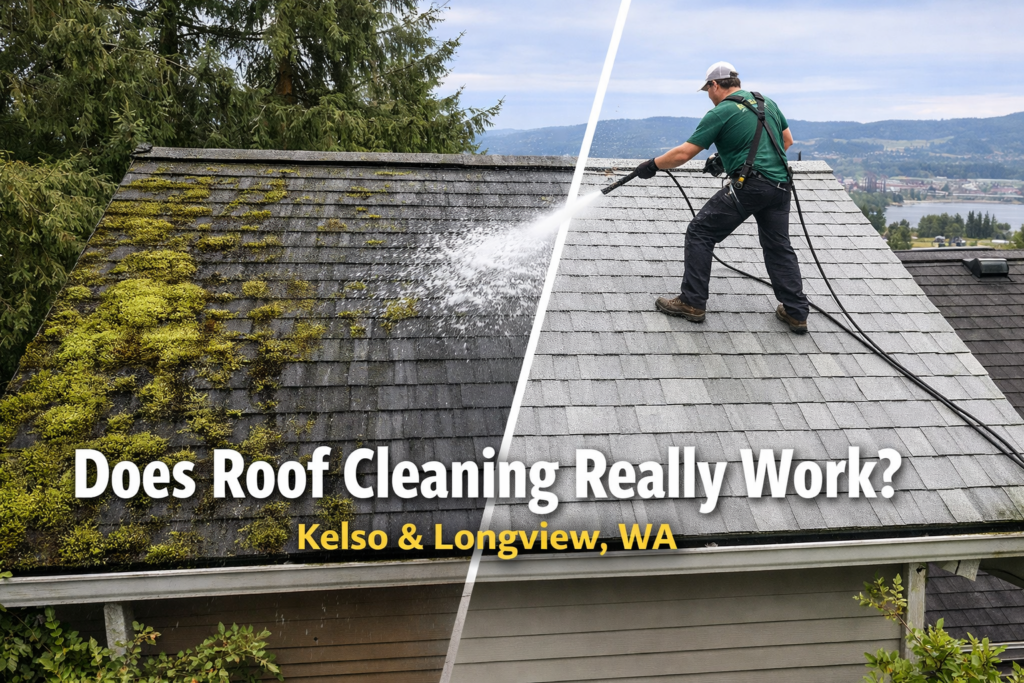
You already know when your roof looks bad.
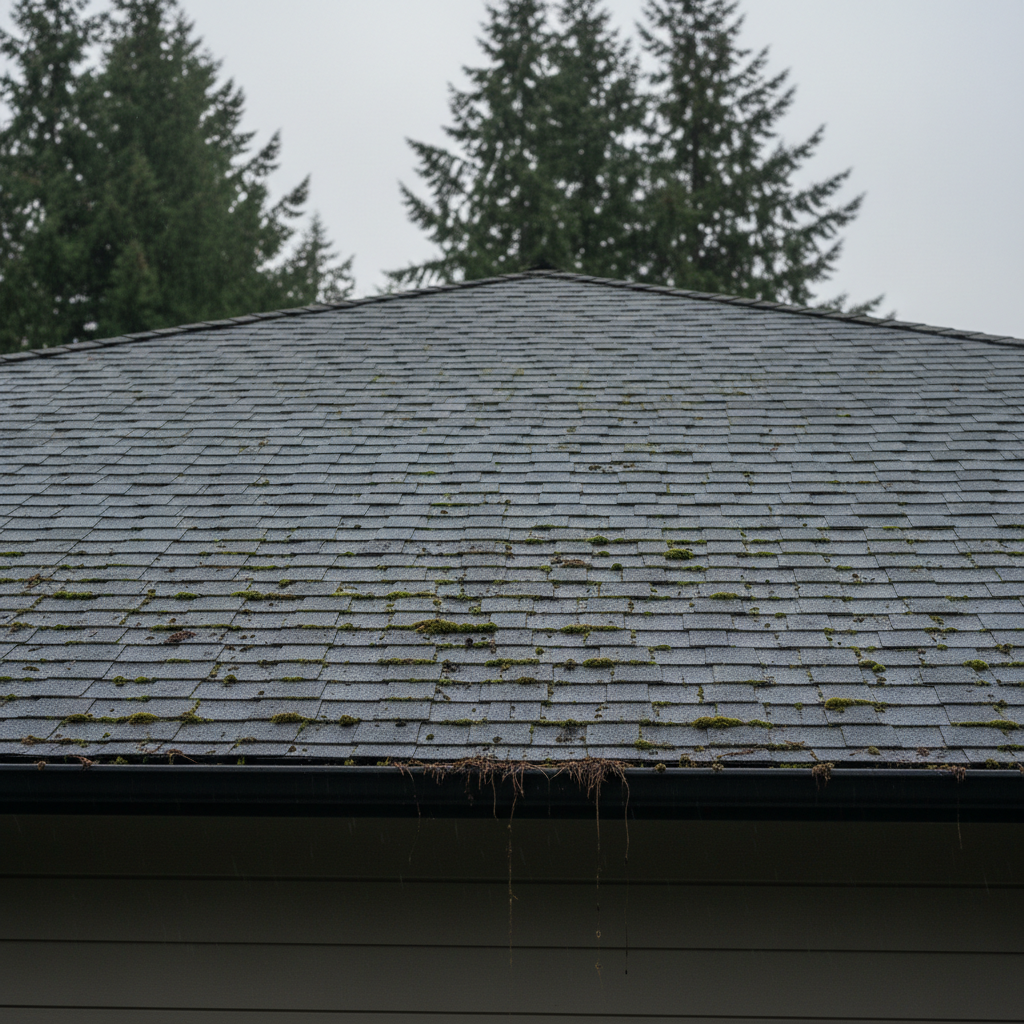
You pull into the driveway in Kelso or Longview, glance up, and see moss clumps, black streaks, or a green film creeping across your shingles. There’s that quick gut check — is this just cosmetic, or is it the start of a much bigger problem?
In Cowlitz County, roofs don’t usually fail all at once. They slowly break down under constant moisture, shade, and organic growth. And unfortunately, by the time many homeowners realize it’s serious, the fix is no longer cheap.
My name is Phillip. I own Prep Pros Pressure Washing & Soft Wash, and I spend a lot of time on roofs throughout Kelso, Longview, Castle Rock, and Kalama. This article is here to explain what’s actually happening to your roof, why pressure washing often makes things worse, and why soft washing is the method that makes sense for Pacific Northwest homes.
Roof Moss and Black Streaks Aren’t Just “Normal Northwest Character”
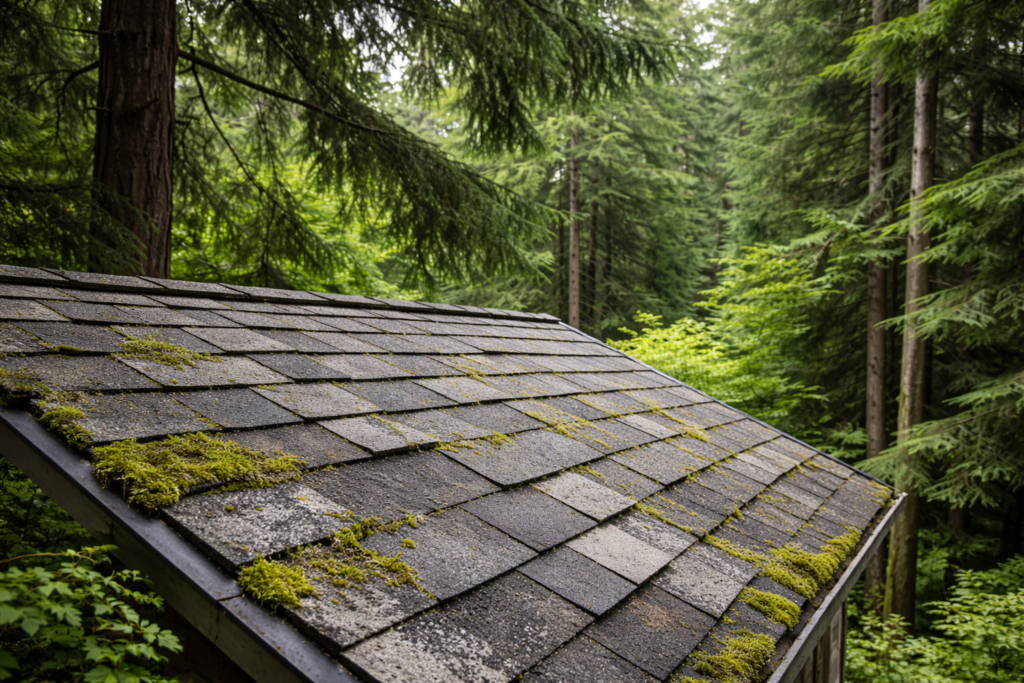
Take a slow drive through Kelso, Longview, Castle Rock, or Kalama after a few wet weeks and look at the rooftops. You’ll see thick moss on shaded slopes, black streaks running from the ridge down, and green growth hugging valleys and edges.
That isn’t just cosmetic staining. It’s living growth feeding on your roof.
Here in Cowlitz County, we experience long rainy seasons, cool temperatures, and tall evergreens that block sunlight and shed needles constantly. Roofs — especially north- and east-facing slopes — often stay damp far longer than they remain dry. That trapped moisture, combined with organic debris, creates the perfect environment for moss and algae to thrive.
Left alone, that growth spreads deeper into the shingle surface and starts doing real damage.
What Moss and Algae Are Really Doing to Your Roof
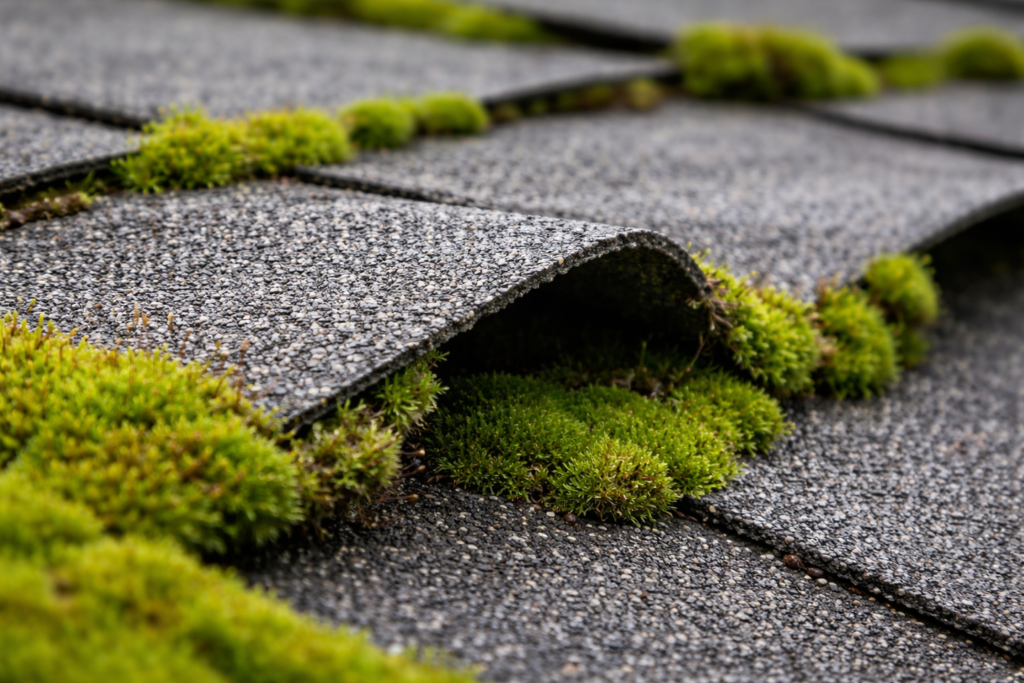
Moss acts like a sponge glued to your shingles. It holds moisture against the roof day and night, lifts shingle edges, and creates pathways for water to work its way underneath. Over time, that can lead to loose shingles, rotted sheathing, and leaks that show up inside the home as ceiling stains or drywall damage.
Those black streaks you see are often algae. While algae doesn’t usually lift shingles like moss does, it slowly breaks down the protective surface of asphalt shingles and shortens their lifespan.
When people ignore these early signs, they’re often surprised later when a roofer tells them the roof failed years earlier than it should have.
Why Pressure Washing a Roof Is a Costly Mistake
The Hidden Damage High Pressure Causes to Shingles
A common thought is, “I’ll just rent a pressure washer and clean it off.” Others hire the cheapest option available and assume clean is clean.
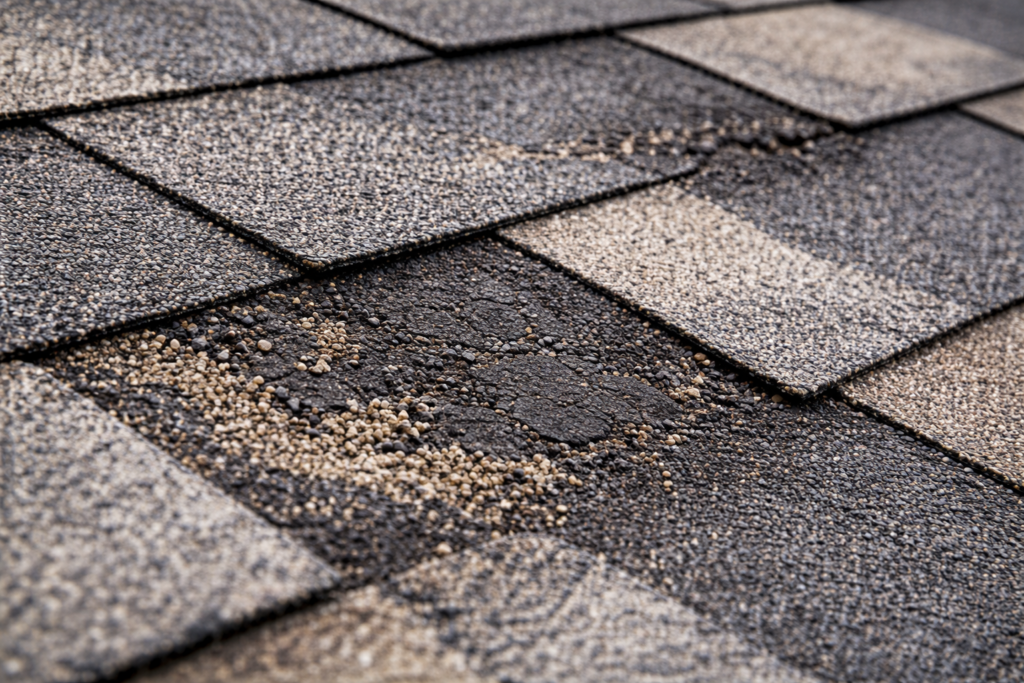
Here’s the problem: high pressure doesn’t just remove moss — it removes the protective granules from asphalt shingles. Those granules shield your roof from UV exposure and weather. Once they’re gone, shingles dry out, become brittle, and fail faster.
High pressure can also force water underneath shingles and into the underlayment, where damage stays hidden until it becomes an interior leak.
What looks good for a few weeks after pressure washing can quietly turn into premature roof replacement.
How Soft Wash Roof Cleaning Works (Without the Hype)
Soft washing takes a completely different approach to roof cleaning than the high-pressure methods that damage thousands of roofs every year.
Instead of relying on brute force, a soft wash system uses low pressure (typically between 150-300 PSI) combined with specialized, roof-safe cleaning solutions designed to target moss, algae, and organic growth at their root. Here’s what makes this method fundamentally different from pressure washing:
The Science Behind the Solution
The cleaning solution we use is a mixture of sodium hypochlorite that includes surfactants, specifically formulated for asphalt shingles. When applied at low pressure, these solutions penetrate the moss and algae growth, attacking the organism at its base rather than just blasting it off the surface. This means moss doesn’t just get knocked away — it gets killed, which slows regrowth significantly.
The solution is applied gently, allowed to work for a period of time (usually 10-30 minutes depending on the growth severity and weather conditions), and then rinsed in a controlled way that respects the roof surface and the integrity of your shingles. This waiting period is critical — it’s what separates soft washing from just spraying water.
Why Manufacturers Recommend Soft Washing Over Pressure Washing
Many roof manufacturers, including the Asphalt Roofing Manufacturers Association (ARMA), GAF, IKO, and CertainTeed, explicitly warn against high-pressure cleaning in their care guidelines and technical bulletins. Why? Because pressure washing removes the protective granules on asphalt shingles. These granules are what shield your roof from UV exposure and weather damage. Once they’re gone, your shingles become thin, brittle, and vulnerable to cracking.
According to ARMA’s official guidance on algae and moss cleaning, “Never use a pressure washer to clean an asphalt shingle roof as this will cause granule loss and very likely premature failure of the roof system.” Instead, ARMA recommends a low-pressure approach with a bleach-and-water solution that dwells on the roof for 15-20 minutes before a gentle rinse—a method that aligns perfectly with soft washing.
Soft washing removes growth without tearing into the shingles, and crucially, it doesn’t create the moisture problems that pressure washing does. When you blast a roof with 3,000+ PSI water, that force can drive water underneath shingles and into the underlayment, where it sits trapped and causes hidden rot.
Treating the Cause, Not Just the Symptoms
Done properly, soft washing treats the cause of the problem instead of just knocking off what’s visible. This is a key distinction: pressure washing is cosmetic. It makes your roof look clean for a few months. Soft washing actually slows the biological growth that’s eating away at your shingles.
The reason moss and algae grow back quickly on most Pacific Northwest roofs is that the underlying conditions — moisture, shade, and organic debris — are still there. The growth returns because the root cause wasn’t addressed. Soft washing solutions include growth inhibitors that make your roof less hospitable to moss and algae for months after the cleaning, which is why results last longer, and regrowth happens more slowly.
For a complete understanding of roof cleaning methods and why soft washing is the right choice for Cowlitz County homes, check out our Ultimate Guide to Roof Cleaning, where we break down every method side-by-side and explain the long-term impacts on your home’s largest investment.
What My Roof Soft Wash Process Looks Like for Local Homes
Step 1: Inspection and Planning
Every roof is different. Before anything is applied, I look at the roof type, age, pitch, moss level, shade patterns, and any existing damage. In Cowlitz County, valleys packed with needles and steep shaded slopes are extremely common, and those details matter.
Step 2: Protecting Landscaping and Siding
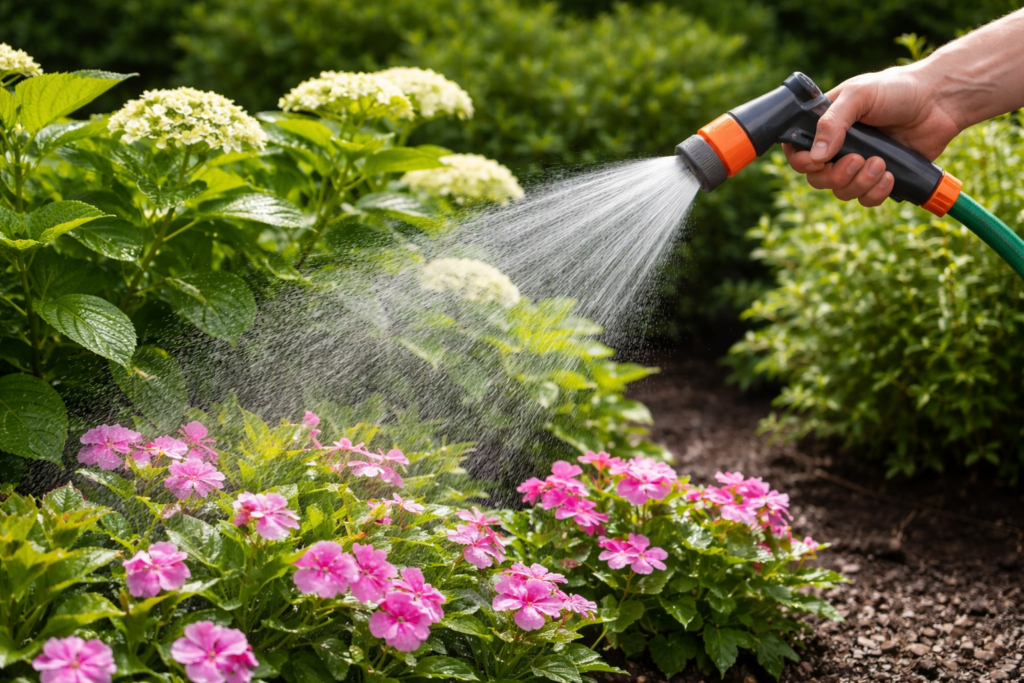
One of the biggest concerns homeowners have is their plants — and that’s valid. Before treatment, landscaping is pre-wetted, delicate plants are protected as needed, and runoff is managed so nothing pools where it shouldn’t.
The goal is simple: the entire property should look better when I leave, not just the roof.
Step 3: Applying the Soft Wash Solution
The solution is applied at low pressure and tailored to the roof material and growth level. Shaded areas, valleys, vents, and chimney lines get extra attention — those are where moss loves to come back first.
Step 4: Rinse, Post-Treatment, and Long-Term Results
After the solution has done its job, a gentle rinse removes loosened grime. In many cases, moss will continue to brown and release over time, helped along by our frequent Pacific Northwest rain.
For homes surrounded by trees, preventative treatments can dramatically slow regrowth.
Why Soft Washing Makes Sense in the Pacific Northwest
Our weather here is beautiful but brutal on roofs. We get long wet seasons, cool temperatures, and neighborhoods full of tall evergreens that shade roofs and drop needles everywhere. That combination means water sits on your shingles far longer than it would in a drier climate.
Roofs in Kelso, Longview, Castle Rock, and Kalama often have north-facing or tree-covered sides that never fully dry, especially through fall and winter. Needles and leaves slide down and pile up in valleys and gutters. That damp, organic blanket is exactly what moss and algae want.
If your roof stays damp more days than it dries, soft washing isn’t optional maintenance. It’s preventative care.
How Routine Roof Cleaning Saves You Thousands Over Time
Think of your roof like your car’s engine. You would not wait until it seizes up to change the oil. Roof cleaning works the same way. When you keep moss, algae, and debris off your shingles, you are protecting the structure beneath and delaying the need for full replacement.
Routine soft wash cleaning removes growth before it lifts shingles and opens up leak paths. Over the life of your home, that can mean the difference between squeezing every year out of your roof and replacing it several years early. That is thousands of dollars in your pocket.
Your roof is a five-figure asset. Protect it with a few hundred dollars of maintenance before you are forced into a replacement you did not plan for.
Signs Your Roof Needs Soft Washing Right Now
You do not need a moisture meter or drone to know when it is time. Look for:
- Visible moss patches, especially along the edges and in shaded areas.
- Black streaks running down from the ridge or near vents.
- Green film or slime on shingles or near gutters.
- Granules are piling up in gutters or at the ends of downspouts.
- Gutters are overflowing every time it rains.
Sometimes the first “notice” you get is from an HOA letter or a home inspector pointing out the roof in a report. Real estate agents also flag dirty or mossy roofs as negotiation points in sales.
If you have gotten a notice, an inspection comment, or you are seeing these signs yourself, call Prep Pros before a cosmetic issue turns into a negotiating chip or a repair bill.
Roof, House, and Gutter Cleaning Work Best Together
Clogged gutters are more than just an annoyance—they’re a silent threat to your entire home’s structural integrity. When needles, leaves, and moss fill them up, water has nowhere to go but over the edges and back against your fascia and siding. That leads to peeling paint, wood rot, and even foundation problems when water pools around the base of your home.
Why Gutter Neglect Costs More Than You Think
Many homeowners in Cowlitz County don’t realize that a clogged gutter system can be more expensive to fix than a dirty roof. Here’s why: when gutters overflow, water runs behind the fascia boards, which are the wooden frames holding the gutters in place. Over time, that constant moisture causes rot that spreads into the soffit, into the walls, and potentially down to the foundation. By the time you notice the damage (usually as paint peeling, soft spots in the wood, or water stains inside the walls), the repair costs have multiplied.
A $300 gutter cleaning prevents a $5,000+ fascia replacement and potential foundation repairs.
Beyond structural damage, clogged gutters also create perfect conditions for more moss and algae growth. When debris piles up and stays wet, it becomes a breeding ground for the same organisms attacking your roof. Gutters filled with rotting pine needles and leaves are essentially planters for roof moss—and that moss can easily spread back onto your shingles or into other parts of your home.
The Ladder Hazard That Gets Overlooked
On top of that, climbing a ladder to scoop rotting sludge out of your gutters is not exactly a fun Saturday. Falls from ladders are a significant public health concern—according to the CDC’s National Institute for Occupational Safety and Health (NIOSH), an estimated 500,000 people are treated annually for ladder-related injuries in the United States, with about 300 proving fatal each year.
A detailed CDC report on occupational ladder fall injuries found that in 2011 alone, there were 34,000 ladder fall injuries treated in emergency departments, with a hospital admission rate of 14%, nearly three times higher than the average ED admission rate. When you’re perched on a ladder 20-30 feet up, reaching into a gutter full of rotting needles and slippery moss, the risk multiplies. One slip, one moment of lost balance, and a routine maintenance task becomes a medical emergency with potential for serious head injuries, broken bones, or spinal damage.
The Integrated Cleaning Solution
This is why roof cleaning and gutter cleaning should never be tackled separately. When I clean a roof soft wash in Kelso, Longview, Castle Rock, or Kalama, I also assess the gutters. Removing moss and algae from the roof is only half the solution if your gutters remain clogged and overflowing.
For a comprehensive guide on proper gutter maintenance, debris removal, and seasonal care specific to our Pacific Northwest climate, check out The Complete Gutter Cleaning Guide for Cowlitz County Homeowners. This guide covers how often gutters need cleaning in our area, what damage to watch for, and why professional gutter cleaning is often safer and more effective than DIY attempts.
Smart Maintenance Prevents the Cascade Effect
Think of your roof and gutters as a connected system. A clean roof directs water into gutters. Clean gutters safely direct water away from your home’s foundation. Clogged gutters back up that water onto the roof, which then sits in valleys and creates more moss. A mossy roof sheds more debris, which clogs the gutters further. It’s a cascade effect that accelerates damage across your entire home.
Breaking that cycle with regular roof and gutter maintenance is the smartest investment you can make in your home’s longevity.
Common Roof Cleaning Myths That Cost Homeowners Money
“It’s just cosmetic.”
Early growth is your warning sign. Waiting makes cleaning harder and damage more likely.
“I’ll do it myself with a pressure washer.”
Most accidental roof damage I see starts with good intentions and rental equipment.
“Those chemicals will kill my yard.”
When mixed, applied, and rinsed correctly, landscaping stays protected. That’s why prep work matters.
Ready to Protect Your Roof? Let’s Get Started
If you’re thinking about getting your roof cleaned, you’re probably wondering about timing, costs, and whether roof soft washing is really the right approach for your home. The good news is that you don’t have to figure this out alone.
Below are the questions I hear most often from Cowlitz County homeowners—and the honest answers that help you make the right decision. But if you’re ready to move forward, you can also get a free quote with no pressure or obligation. I’ll assess your roof, answer any concerns, and give you a clear picture of what your home needs.
Local Homeowner Questions About Roof Soft Washing (FAQ Style)
Is It Safe To Soft Wash My Roof In Cowlitz County?
Yes, when it is done the right way. Roof soft washing uses low pressure combined with a roof-safe cleaning solution to remove moss, algae, and stains without tearing into your shingles. It is far safer for your roof than high-pressure washing and is in line with how many manufacturers recommend maintaining asphalt shingles in a wet climate.
How Often Should Roofs Be Cleaned in Cowlitz County?
In a dry climate, you might be able to go longer between roof cleanings. In Cowlitz County, with our rain and trees, a reasonable guideline is every 2–4 years, depending on:
- How much shade does your roof get?
- How many trees overhang or surround your home?
- What type of roof do you have?
- Whether you already have moss or just light staining.
The best time to schedule a roof soft washing is often during a dry stretch from spring through fall, when conditions are safest, and the cleaning can be done without constant rain. That said, there are plenty of days outside that window when it is still safe and effective, and I work around the real-world Cowlitz County forecast.
If you cannot remember the last time your roof was cleaned, it is probably overdue—reach out for a quick assessment, and I will tell you honestly what it needs.
How Much Does Roof Cleaning Cost Around Kelso And Longview?
The cost depends on roof size, pitch, how bad the moss or staining is, and how easy it is to access. A small, lightly stained roof is very different from a steep, heavily mossed roof under big trees. Instead of guessing, I offer free, no-pressure quotes so you know exactly what it will cost before we schedule anything.
How Long Will My Roof Stay Clean After A Soft Wash?
In our climate, you can usually expect roof soft washing results to last a couple of years or more, depending on shade, tree cover, and how much debris lands on your roof. North-facing and heavily shaded roofs will need attention sooner than open, sunny ones. I can give you realistic expectations for your specific home when I see it.
Do You Serve Castle Rock, Kalama, And Surrounding Cowlitz County Areas?
Yes. Prep Pros Pressure Washing & Soft Wash is based here locally, and I routinely work in Kelso, Longview, Castle Rock, Kalama, and throughout Cowlitz County. If you are not sure whether you are in the service area, just ask—chances are good I have already cleaned a roof near you.
What Makes Prep Pros Different From Other Pressure Washing Companies Near Me?
Prep Pros is not a big franchise. It is local, owner-operated, and when you call, you are dealing directly with me, Phillip. I take my time with prep and plant protection, use soft wash methods that respect your roof, and treat your property like it is my own. You are not just a work order—you are my neighbor, and my business reputation is tied to how your home looks when I pull away.
If you want a local pro who shows up, communicates, and cares about the details, request your quote from Prep Pros today.
How To Schedule Your Roof Soft Wash With Prep Pros
Getting started is simple. You can reach out to me directly—call 360-747-1493, send a text, or request a free quote online—and tell me a little about your roof and what you’re seeing. From there, I either come out to look in person or, if appropriate, review photos to give you a clear, no-obligation estimate.
What To Expect On Service Day
When we’re ready to move forward, here’s exactly what happens:
On the day of service, I arrive when I say I will. No surprises, no delays. I’ll walk you through exactly what I’m doing, answer any last-minute questions, and then get to work protecting your plants, applying the soft wash solution, and rinsing everything down carefully.
When I leave, you have a roof that looks dramatically better and a home you feel proud to pull up to again. More importantly, you have a roof that’s protected and positioned to last years longer than it would have without proper maintenance.
Your Next Step
Don’t wait for moss to get worse or for a contractor to call you mid-sale. Get your free roof assessment today or call me directly at 360-747-1493. Either way, you’ll get honest feedback about what your roof actually needs.