Roof moss can shave years off your shingles and quietly invite leaks if you ignore it. Moss thrives where shade, debris, and trapped moisture meet, so the article explains the biology behind those fuzzy patches and how to spot them before they cause real damage. You’ll learn two simple checks to tell moss apart from roof algae and lichen, and why routine fixes like trimming overhanging branches and keeping gutters clear matter more than one-off removal. The article also covers safe removal options, from careful homeowner treatments to professional soft-wash services, and when to call a pro to protect your roof.
Quick summary
- Why moss forms: shade, trapped debris, and slow-drying surfaces let spores colonize damp shingles.
- Damage risks: moss lifts shingle edges, holds water, and accelerates granule loss, increasing leak and replacement risk.
- Safe removal: use soft-wash techniques and roof-safe treatments rather than scraping or high-pressure washing to avoid shingle damage.
- Preventive fixes: install zinc or copper strips, trim overhanging branches, keep gutters clear, and improve ventilation to reduce moisture.
- Routine checks: inspect seasonally and hire a pro for steep roofs, heavy infestations, or suspected decking damage; ask about guarantees and cost.
What causes roof moss and who’s at risk
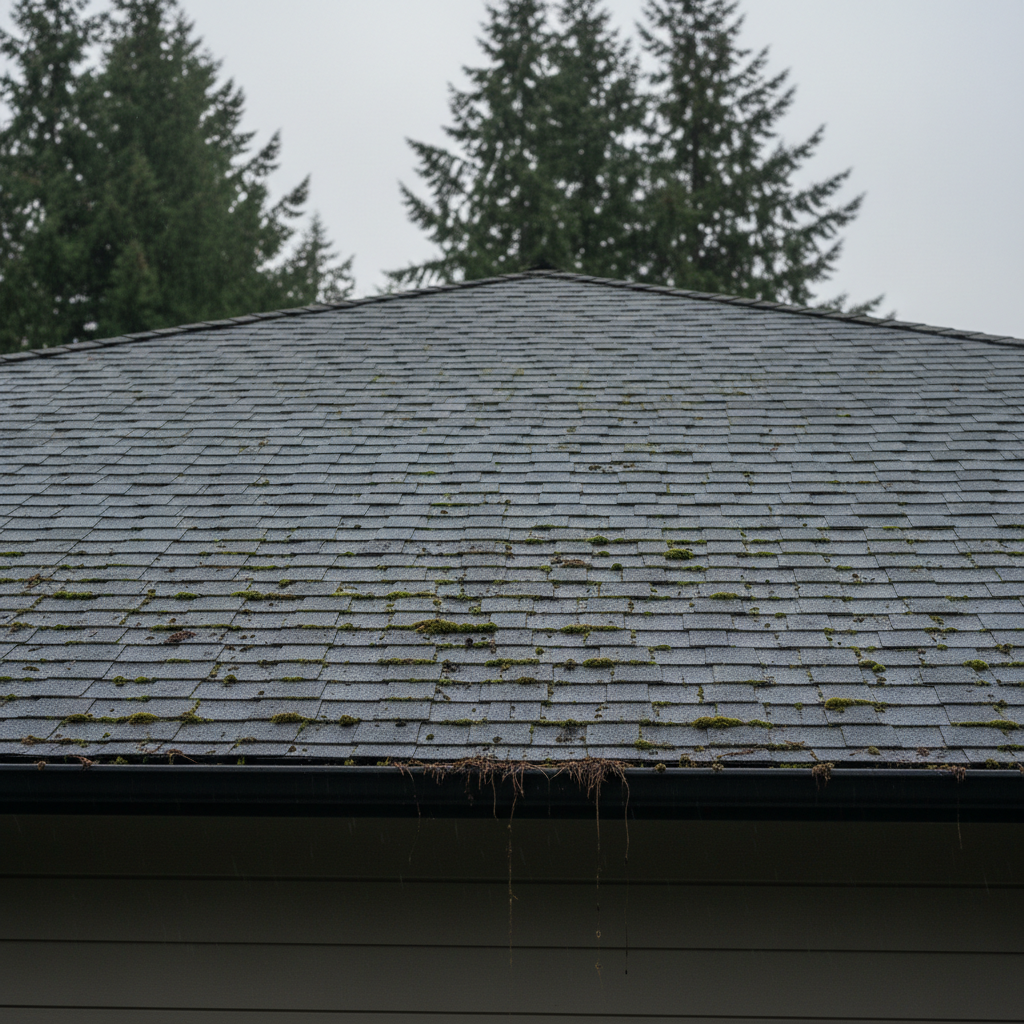
If your roof stays damp and shaded, moss will take hold quickly. Roof moss is a small, nonvascular plant that colonizes damp, shaded surfaces and damages shingles over time. It holds water against roofing materials and sends fine rhizoids under shingle edges, accelerating granule loss and promoting rot by keeping the roof continually wet. Those rhizoids can lift shingles and expose the underlayment, so treating the conditions that let moss thrive matters more than just scraping visible growth.
People often confuse moss with algae or lichen, but the three look and behave differently. Moss forms spongy, upright green tufts you can lift, algae shows as dark, smeary streaks, and lichen appears flat, crusty, and firmly attached. Two quick checks help identify the problem: compare texture for tufts versus streaks or crusts, and perform a gentle touch test; moss lifts, algae smears, and lichen stay put. Identifying the organism helps pick the right removal method and prevention plan.
Several environmental factors create a favorable habitat for roof moss: north-facing slopes, heavy tree cover, clogged gutters, and generally humid microclimates that slow drying. Reducing those moisture sources can make a big difference over months and years because drier shingles resist colonization. Pruning overhangs and cleaning gutters removes shade and organic buildup, reducing spore settlement and moisture retention. Make those simple fixes first to reduce recurrence after removal.
Roof design and materials also affect vulnerability. Wood shakes, older asphalt shingles, and low-slope roofs trap moisture and debris more easily than steep, well-ventilated roofs. If you already have growth, plan a scheduled removal and then address the root causes so the problem is less likely to return.
How moss damages shingles and when to worry
Moss harms shingles in three main ways: rhizoids work under shingle edges, lifting and curling tabs; the plant holds water against the roof surface; and trapped moisture accelerates granule loss and UV damage. Moss often starts in valleys and shaded, debris-filled sections where drying is slow. Over time, these effects weaken shingles and make the roof more prone to leaks. Spotting early signs helps avoid more extensive repairs.
Wet pockets created by moss let rot develop in the wood decking and create paths for leaks around flashings and roof penetrations. Heavy, wet growth also adds weight and creates a microenvironment that invites algae and lichen to move in. Addressing moisture, not just removing moss, prevents these secondary problems from becoming structural issues.
Watch for signs of advanced damage before small patches turn into costly repairs. Document problem areas with photos so you can track changes and show contractors specific trouble spots.
- Lifted, curled, or loose shingles
- Missing granules in gutters or on downspouts
- Black stains inside the attic or along rafters
- Soft or decayed decking at roof penetrations
- Localized sagging or uneven roof planes
Timing varies with climate and maintenance. In damp, shaded locations, you can see visible growth within a few seasons, and black streaks may appear on unprotected shingles within about three years. Structural problems develop faster when moisture persists for years, so inspect yearly and after major storms. Keep photos and notes handy for repair estimates and warranty conversations.
DIY removal methods that actually work and what not to do
Many homeowners try to scrape moss off, but scraping or pressure washing often causes more harm than the moss itself. If you plan to tackle roof moss yourself, prioritize safe chemicals and gentle technique instead of scraping or high-pressure washing. A careful approach removes growth without accelerating shingle wear. Below are proven mixes, dwell times, and tools that remove moss while protecting plants and gutters from runoff. For a deeper comparison of cleaning approaches, see a practical look at roof soft-washing vs pressure.
For homeowners, common options include household bleach (5 to 6 percent sodium hypochlorite) diluted roughly one part bleach to one part water for heavy growth, or white vinegar (about 5 percent acetic acid) diluted one part vinegar to one part water for lighter patches or sensitive landscaping. Add a few drops of mild dish soap as a surfactant and apply with a pump sprayer for even coverage. Protect plants by wetting them first and covering them with plastic, and wear eye protection and gloves when mixing or applying solutions. For manufacturer and industry tips on removing growth from shingles, review guidance on how to remove moss from shingles.
Follow ladder and roof safety: wear non-slip shoes, use anchors on steep pitches, and don’t work alone on hazardous slopes.
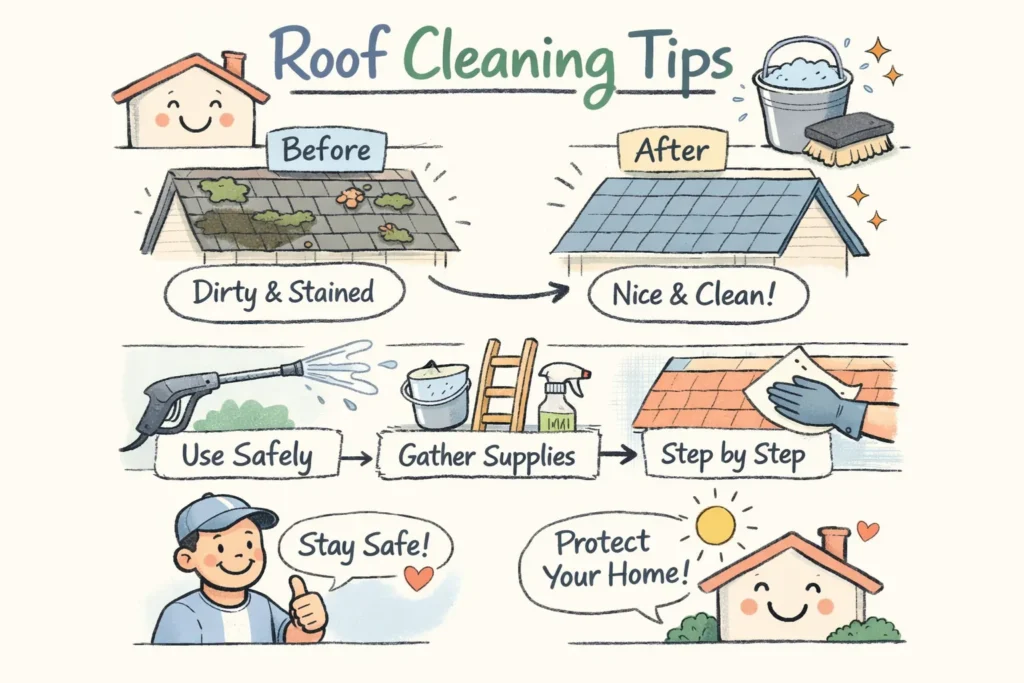
- Protect plants and lay tarps in gutters.
- Pre-brush loose debris downward.
- Apply the chemical solution with a pump sprayer.
- Let it sit 15 to 30 minutes, reapply if needed.
- Gently brush dead moss away, working downhill.
- Clear gutters and rinse on very low pressure.
- Apply granulated zinc or schedule a follow-up treatment.
Follow those steps for a durable DIY result, and keep treatment records to limit regrowth. Stop and call a professional if your roof is steep, the infestation is extensive, or you find decking damage. Professionals can assess structural issues and may offer warranty-friendly options. For a complete homeowner walkthrough of cleaning steps and safety checks, see our Step-by-Step Roof Cleaning Guide for Homeowners, Prep Pros Pressure Washing. The following section explains long-term prevention and how pros handle heavy jobs.
Long-term prevention: products and roof hardware that stop regrowth
Keeping roof moss away long-term requires layered actions: hardware, inhibitors, and landscape or ventilation changes. Each measure targets moisture or spore contact, so regrowth is less likely. Combining these methods reduces the frequency of cleanings and helps shingles last longer. Select options that match your roof type and local climate for the best results.
Metal strips are a practical hardware option. Copper is most effective and typically protects about 15 to 20 feet down a slope by releasing ions that inhibit spores as runoff moves over the metal. Zinc covers a shorter distance and is generally less expensive. For a detailed comparison of zinc strips vs copper, review the trade-offs before choosing hardware. Proper installation means tucking a narrow strip under the top ridge shingles with careful fastening to avoid creating leak paths.
Chemical inhibitors add another layer of defense. Granulated zinc sulfate and professionally applied soft-wash inhibitors change the roof surface chemistry to reduce regrowth, while shingles containing copper granules resist algae and moss longer than standard asphalt. Many inhibitors slow regrowth for one to two years, so plan periodic cleanings as part of maintenance. Some liquid coatings claim longer protection, but usually require professional application to avoid voiding warranties. For further manufacturer advice on managing biological growth, see guidance on managing moss and algae.
Landscape and ventilation changes remove the conditions moss prefers. Trim overhanging branches to increase sun and wind exposure, keep gutters and valleys clear, and ensure soffit and ridge vents are open and functioning. These actions help shingles dry faster after rain and make chemical and hardware methods far more effective. Work with a roofer or an arborist if trimming requires ladders or heavy cutting. For related maintenance topics, see our Roof and Gutter Cleaning, Prep Pros Pressure Washing category.
- Trim branches back six to ten feet from the roof to boost airflow and sunlight
- Clear gutters at least twice a year and remove leaves from valleys
- Install or clean soffit and ridge vents to reduce attic humidity
These measures lower moisture and improve the effectiveness of chemical and hardware defenses. The next section offers a seasonal schedule to keep moss away year-round and notes when to hire a professional.
Seasonal maintenance schedule to keep moss away year-round
Turn prevention into a simple calendar so tasks don’t fall through the cracks. A few short, repeatable chores each season prevent small patches from becoming costly repairs and extend shingle life. Plan one quick check each season and address trouble spots promptly. Regular, light maintenance is far easier and cheaper than major cleaning or replacement.
Spring: After major storms, do a focused roof check and clear drainage paths. Clean gutters and valleys, remove leaf mats, and use a soft brush to lift debris from shaded seams where growth recurred last year. If you had persistent patches, apply an early preventative treatment or book a professional soft wash to reset the surface. Quick spring action reduces moisture retention and limits root penetration under shingles.
Summer: Monitor shaded north-facing slopes and the ridge for regrowth, and treat small spots right away. Diluted white vinegar works for light patches without harsh chemicals, and warm, dry weeks help treatments work faster. Use summer to repair curled or damaged shingles so water cannot collect and feed moss during wetter months. These steps minimize the workload before fall and winter rains begin.
Fall and winter prep: Trim overhanging branches before the rains begin and clear gutters so water drains freely. Consider installing metal inhibitor strips and ask your technician about copper or zinc options for passive defense. Schedule professional soft-wash cleaning in late fall or early winter when moss is actively growing to reduce regrowth over the wet season. Proper fall prep makes spring checks faster and less likely to uncover new damage.
When to call a pro, what to ask, and what it should cost
Some jobs are safer and smarter to hire out: steep roofs, heavy infestations, and suspected decking damage should generally be handled by professionals. Hire a professional for those conditions or if you are unsure how treatments affect your shingle warranty. Professionals use anchors, lifts, and commercial soft-wash systems that kill growth at the root while minimizing shingle wear. They can also document the work for warranty and resale needs.
Before accepting an estimate, use a short checklist so there are no surprises. Ask whether the contractor uses soft-wash or high-pressure methods, which chemicals they use, and if they will provide safety data sheets, and whether the work affects your roof warranty. Also request proof of insurance, references, and before-and-after photos. A written guarantee and a follow-up plan for regrowth are useful additions.
Watch for red flags such as contractors who insist on high-pressure washing, refuse to protect landscaping, or decline to provide written guarantees and photos. If a contractor avoids discussing runoff protection or chemical safety, consider other estimates. Reputable companies will explain their methods and show examples of similar work. Always get terms in writing before work starts. For national cost comparisons and typical pricing ranges, review data on roof cleaning costs.
Prep Pros Pressure Washing uses soft-wash cleaning to kill moss at the root, remove residue gently, and apply inhibitors that slow regrowth. Typical rates run about $0.20 to $0.80 per square foot, and most residential jobs fall between $300 and $1,200, depending on roof pitch, growth extent, and access. Our scope includes plant and roof protection, masking of vulnerable areas, before-and-after photos, and a written estimate. We offer free estimates across Cowlitz County, Kelso, Longview, and nearby areas.
Keep roof moss from taking hold year-round
You do not need to wait for obvious green carpets to act; inspect shaded areas from the ground with binoculars or photograph from a stable ladder. If you spot dark streaks, raised edges, or dense growth, start with a quick gutter clean and schedule a roof check.